The Great New Zealand AI Roadshow is a nationwide event series focused on helping businesses understand the rapidly evolving world of artificial intelligence. After several successful years touring the country, the organisers wanted the 2026 campaign to feel bigger, more connected and instantly recognisable.
Brand IQ was asked to create a stronger visual identity for the roadshow using AI-generated imagery, while still keeping the campaign unmistakably New Zealand in personality and setting.
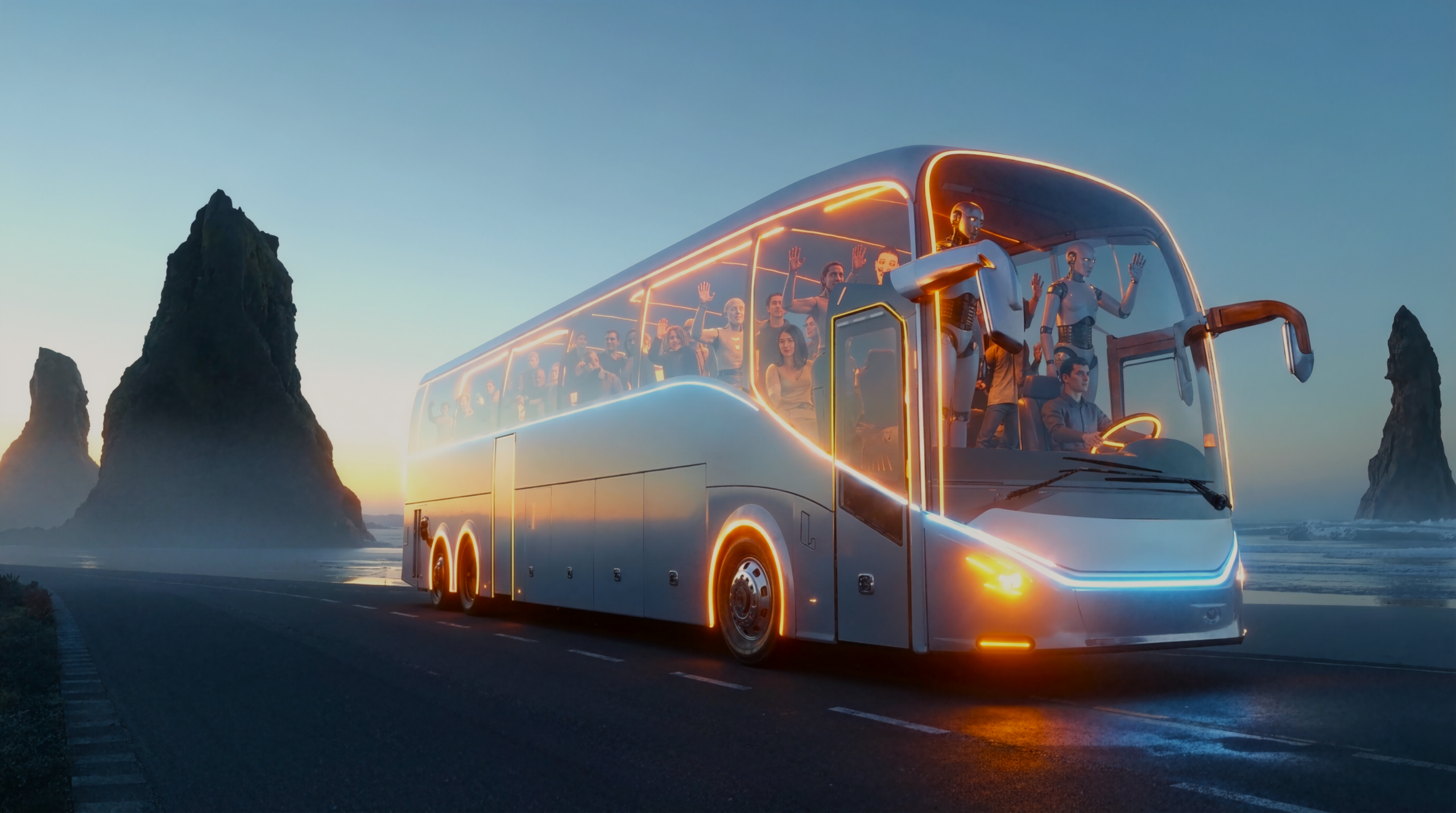
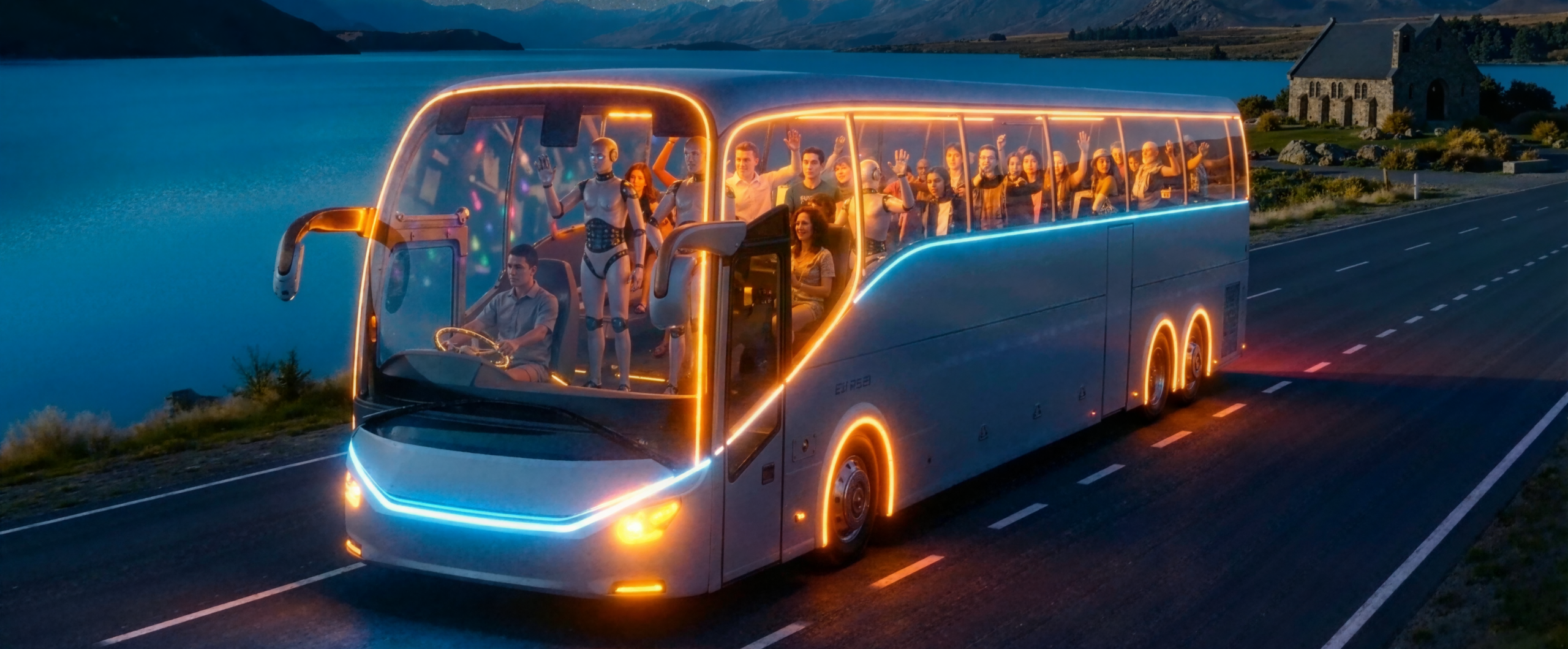
The result was the creation of a new recurring brand icon, an AI Roadshow tour bus travelling through iconic New Zealand landscapes, accompanied by both humans and robots interacting together in playful and unexpected ways.
One of the biggest opportunities with the campaign was hidden inside the name itself.
“Roadshow” naturally suggests movement, travel and discovery, yet previous campaigns had not fully leaned into that idea visually. AI New Zealand founder Justin Flitter wanted to create a central image that could become synonymous with the event itself, something audiences would instantly recognise from one execution to the next.
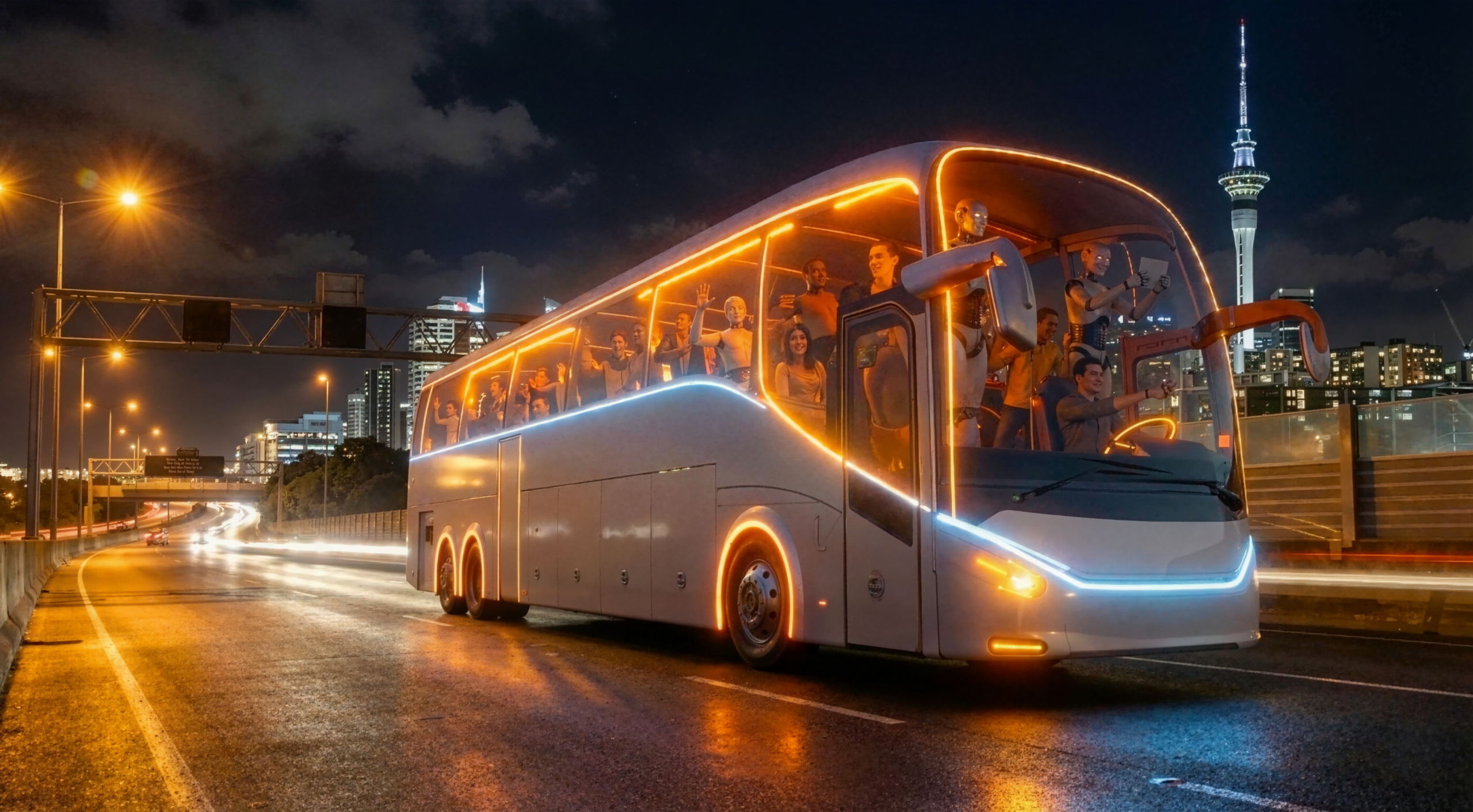
The concept of the AI Roadshow bus emerged as the perfect solution.
The bus became more than just transport. It became the visual thread connecting the campaign together across multiple locations, scenes and executions. Whether travelling through alpine roads, coastal highways, rolling farmland or dramatic South Island landscapes, the bus reinforced the idea that AI knowledge and innovation were travelling around the country, bringing people together.
Creating consistency with AI-generated imagery
While AI image generation is exceptionally powerful, maintaining consistency across a recurring character or object remains one of the biggest creative challenges.
The campaign required the same bus to appear across multiple scenes, angles, lighting conditions and environments while still feeling like the same recognisable vehicle every time. The imagery also needed to remain cinematic, polished and believable despite being generated entirely through AI workflows.
Brand IQ developed a consistent visual treatment for the bus itself, refining proportions, detailing, colours and styling so it could hold together as a recognisable brand asset across the campaign.
The challenge became even more complex because the bus needed to appear naturally within vastly different New Zealand environments. Bright coastal sunlight, moody mountain atmospheres, rural roads and changing weather conditions all affected how the vehicle needed to be rendered and integrated into each image.
The result was a campaign that felt visually unified rather than a random collection of disconnected AI scenes.
Bringing humans and robots together
For the 2026 campaign, the imagery evolved beyond simply showcasing AI technology.
Humans and robots were shown interacting together throughout the campaign in relaxed, humorous and distinctly Kiwi ways.
The robots were not presented as threatening or hyper-scientific. Instead, they became part of the road trip experience itself, exploring New Zealand alongside people, sharing moments, landscapes and adventures.
That balance helped make the campaign feel accessible to business audiences who may still feel uncertain or intimidated by AI technology.
The imagery communicated something important without needing to say it directly: AI is becoming part of everyday life, and that future can still feel human.
The project also highlighted one of the emerging strengths of AI-assisted creative production. Instead of using AI simply to generate isolated images, Brand IQ used it to build an entire connected visual world with recurring characters, consistent styling and narrative continuity across a campaign.
It demonstrated that AI-generated branding can move beyond novelty and become a genuine storytelling system capable of creating memorable campaign assets at scale.