
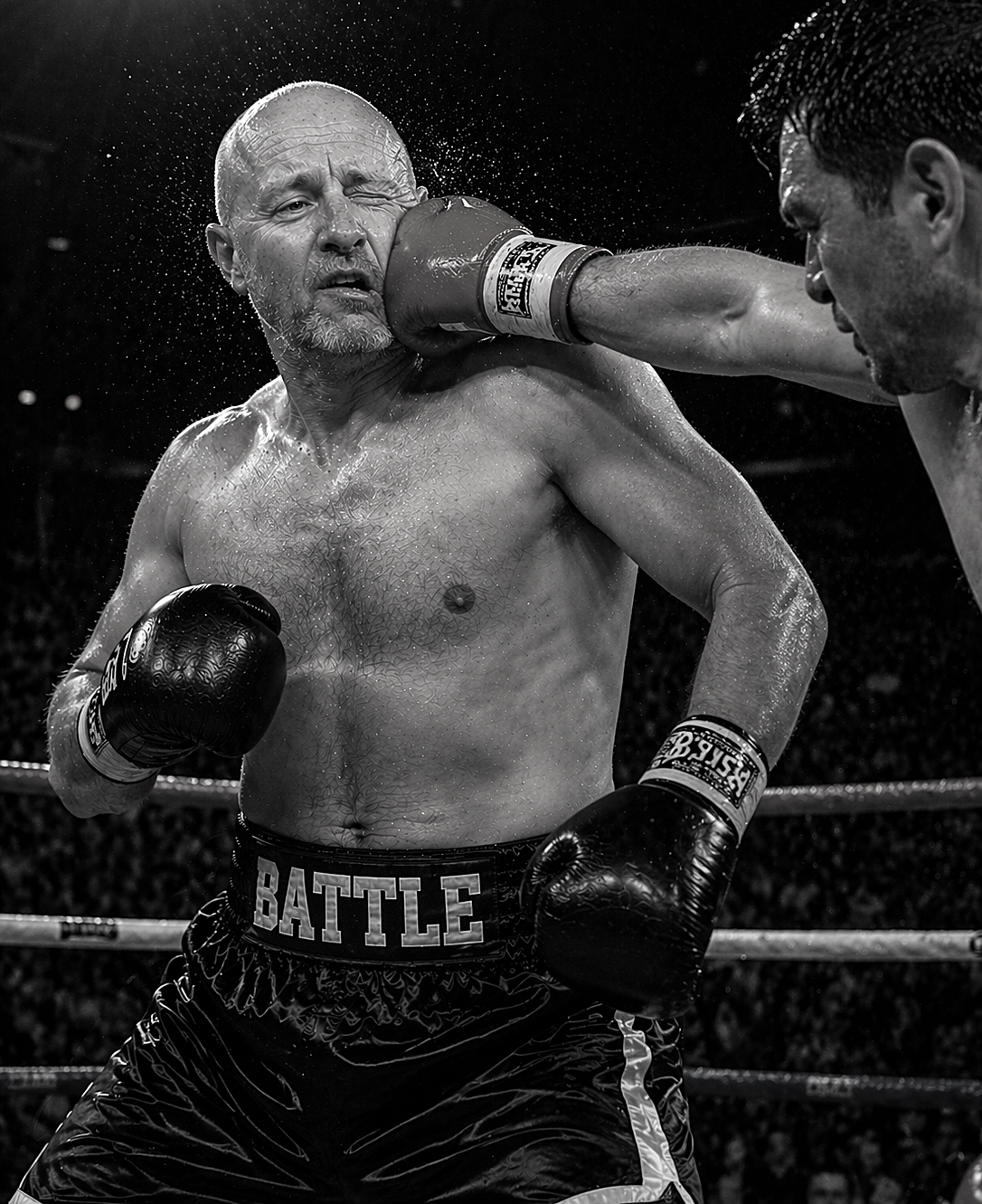
Treat the setback as data, not identity. The damage doesn’t come from the failure itself, it comes from the story you tell yourself immediately after.
I’ve been smacked in the face more times than I can count.
Thirty-plus years in this industry and the hits keep coming. Friends who turned out not to be friends. Pitches that got torn apart in front of the whole room. Staff who tried to take my clients with them on the way out. Anti-AI trolls who decided my work deserved a paragraph of unsolicited venom at 7pm on a Tuesday.
The 2008 recession that wiped out client budgets overnight. Covid, which emptied the diary in a week and turned every planned campaign into a document nobody needed. The interest rate squeeze that quietly killed three retainers in a single quarter.
You don’t see those punches thrown. You just wake up on the canvas wondering what the hell happened.
Every one of those landed. Every one of those left a mark.
Mike Tyson said it best. Everyone’s got a strategy till they get smacked in the face in the ring.
That line has sat with me for years, because it’s not really about boxing. It’s about the gap between the plan you drew up on Sunday night and the reality of Tuesday morning when the client email lands and everything goes sideways.
Here’s what three decades of getting hit has actually taught me.
The punch is never the thing that damages you. It’s the story you tell yourself in the four seconds after it lands.
“Maybe they were right.” “Maybe I don’t know what I’m doing.” “Maybe I should play it safer next time.”
That voice is the real opponent. The one that wants to use the hit as evidence you were never meant to be in the ring.
The people who keep going are the ones who refuse to let the hit become the lesson.
The lesson is always somewhere else. Usually smaller. Usually practical. A tweak to the offer. A sentence in the pitch that wasn’t earning its place. A contract clause you should have written tighter. A client you probably should have fired two years before they fired you. Not “I’m not good enough.” Something you can actually fix on Monday.
Marketing managers take these hits every week. The campaign that underperformed. The board meeting where the numbers got picked apart. The CEO asking, in front of everyone, what exactly AI is doing for the team now. The budget cut that landed in an email at 4.55pm on a Friday.
Are you going to let those moments rewrite who you think you are? Or will you treat them as data, dust off, and get back to the specific, fixable thing underneath?
Your strategy will get hit. Everyone’s does. The only question is what you do in round two.